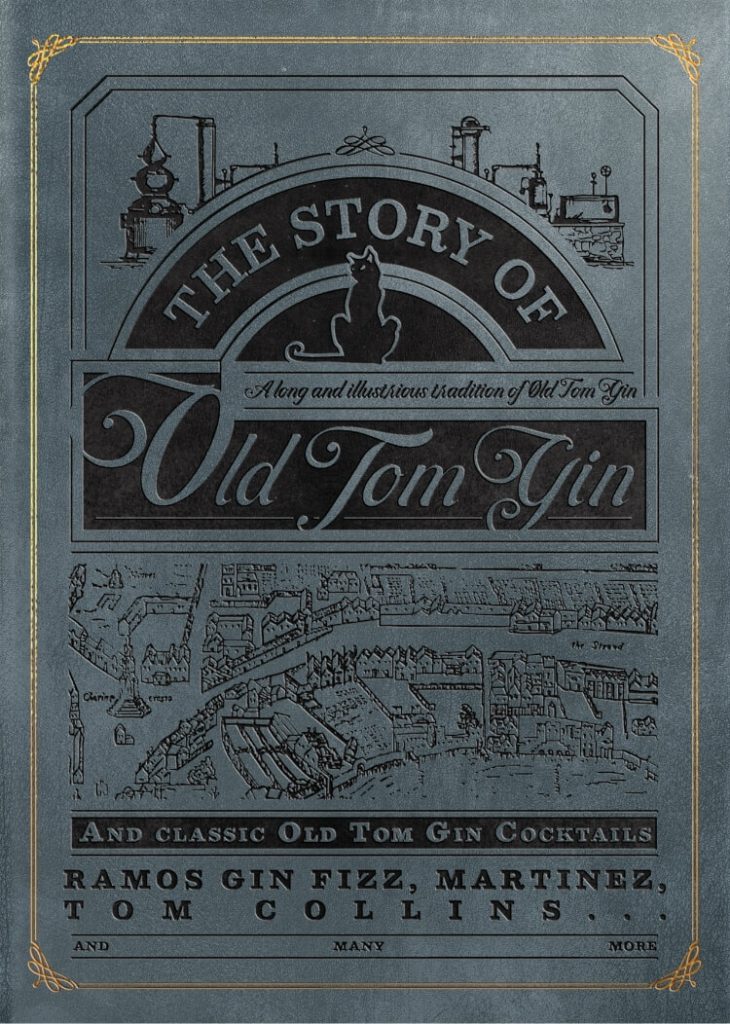
The Story of
Old Tom gin
Gin has been synonymous with London since the 1700s and, although it is a sophisticated spirit found in every cocktail bar around the world, it has had a long and illustrious journey to become what we enjoy today.
The first style of London gin is affectionately known as Old Tom Gin. It is a style that has evolved over the years and, whilst no longer the most popular style of gin, it remains a staple in leading cocktail bars and is recognised as the gin for classic cocktails.
The origin of Old Tom Gin is much debated and has evolved since the 1700s. It is this mystique that gives Old Tom Gin the warmth and esteem that bartenders and enthusiasts still hold today.
This ‘Story of Old Tom Gin’ aims to answer some of those debated questions and to allow the narrative to be shared, ensuring that Old Tom Gin retains its unique place in the folklore of cocktails.
1720s – 1850s
The Early Years of Old Tom Gin
Cats, myths and legends
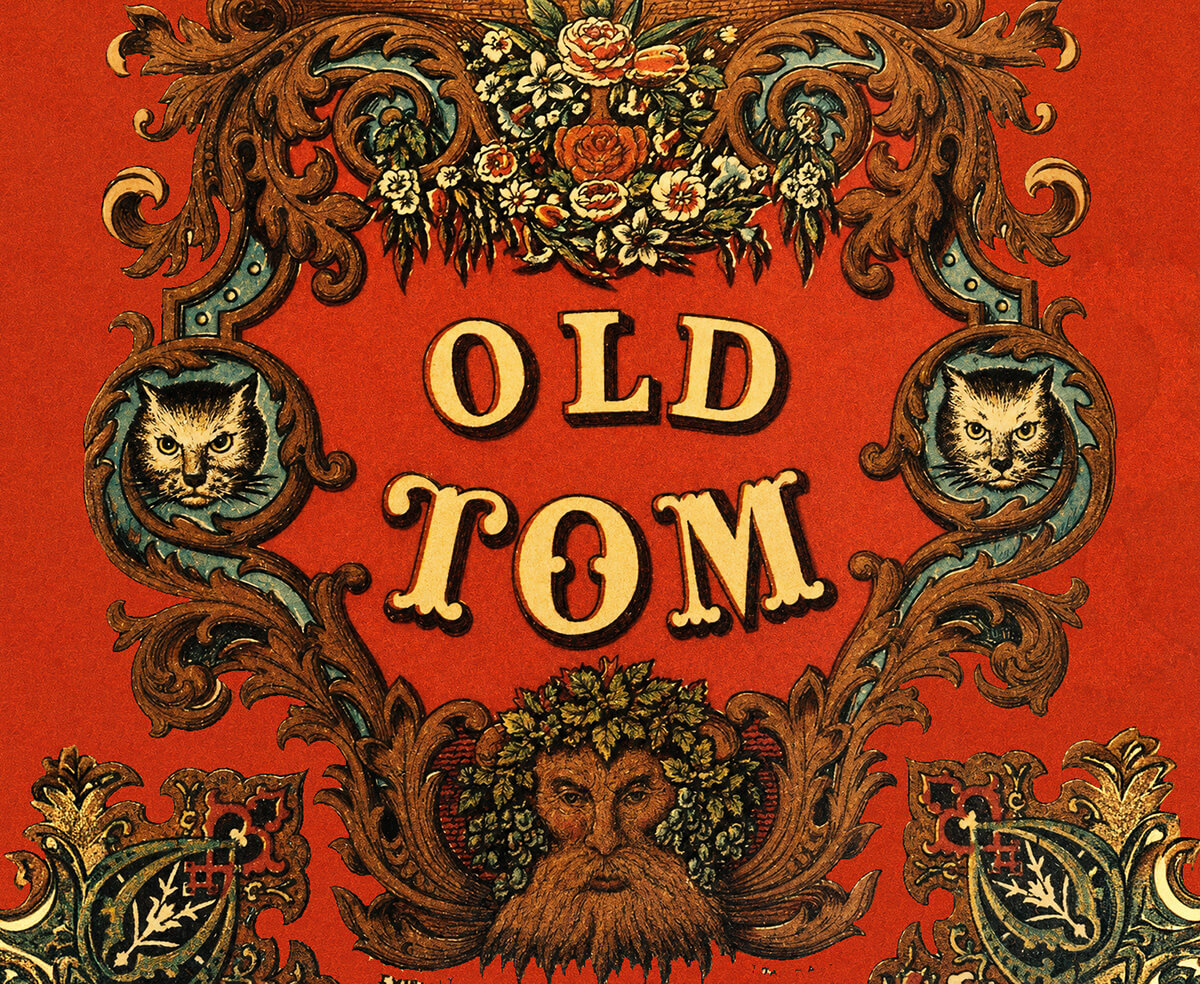
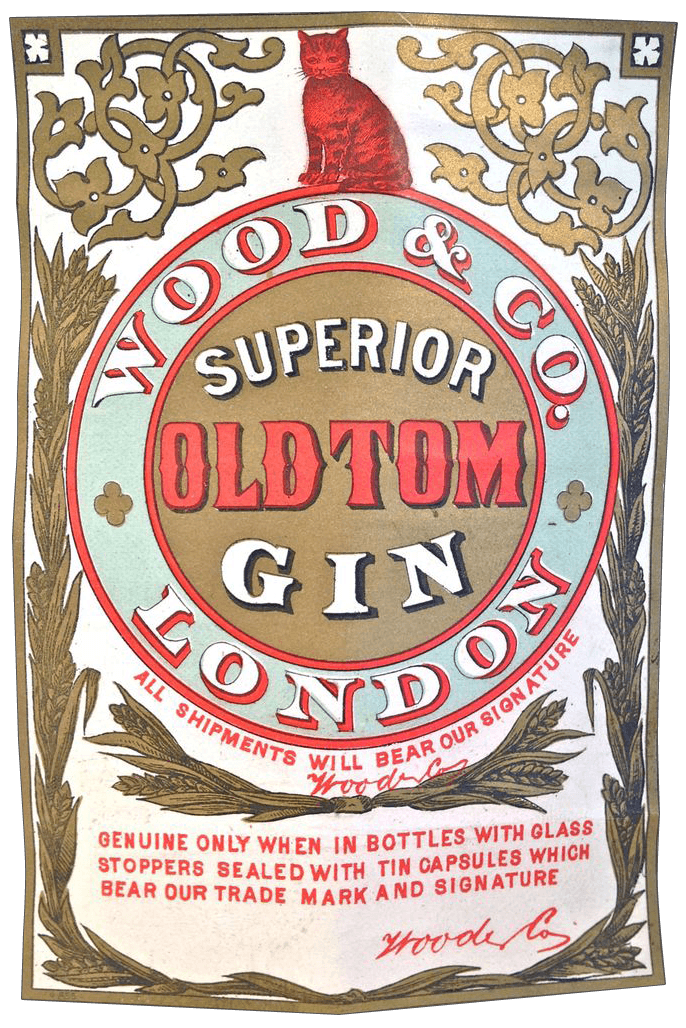
Many often ask how the Old Tom Gin name came to be. Legend has it that the name was born from the entrepreneurial practices of a certain Captain Dudley Bradstreet. In 1736, Bradstreet acquired a property in London along with a stock of gin. He set up a painted sign of a Tom Cat in the window and spread the word that gin could be purchased ‘by the cat’. Under the sign, beneath the cat’s paw, was a slot and a lead pipe, which was attached to a funnel inside the house. Customers placed their money in the slot and duly received their gin. Bradstreet’s idea was soon copied all over London. People would stand outside houses, call ‘puss’, and when the voice within said ‘mew’, they knew that they could buy bootleg gin inside. Before long, Old Tom became an affectionate nickname for gin.
Joseph Boord was the first distiller to register the image of a cat in his 1849 Cat and Barrel trademark for Old Tom Gin, which was also the earliest registered trademark for gin in general. Once branded bottles were introduced in the 1860s, bottles of Old Tom Gin invariably carried an illustration of a black cat. Boord offered a different story for the product’s origin, claiming under oath that the product was named after an employee known as “Old Tom” who worked at another distillery. The 1903 challenge to Boord’s mark with the cat and barrel became a landmark case in UK trademark law.


Empire of the sweet
Another debate has been whether Old Tom Gin must contain sugar. In 1802, an entirely new section of the Port of London, the West India Docks, was built to process the vast amounts of sugar arriving into London. An increasing number of large refiners made sugar readily accessible and affordable to many London trades, including distillers who required copious amounts for a broad range of products. Evidence of this sweet tooth was the rising appeal and production of cordials, and the presence of sugar was seen (even if just a smidgen) across a broad range of spirits, including Old Tom Gin.
taste and production
19th-century Old Tom Gin is often described as the missing link between Dutch genever and London Dry Gin, combining the rich mouth feel of its predecessor with the fuller, rounded profile of botanicals found in its successor. Even more so than with modern gins, the taste profiles of different distillers’ Old Tom Gins would have varied greatly, as each distiller had their own recipe, production capabilities, and techniques. However, what every distiller was aiming for was a balance between the rich flavours of the gin botanicals and sweetness derived from sugar.
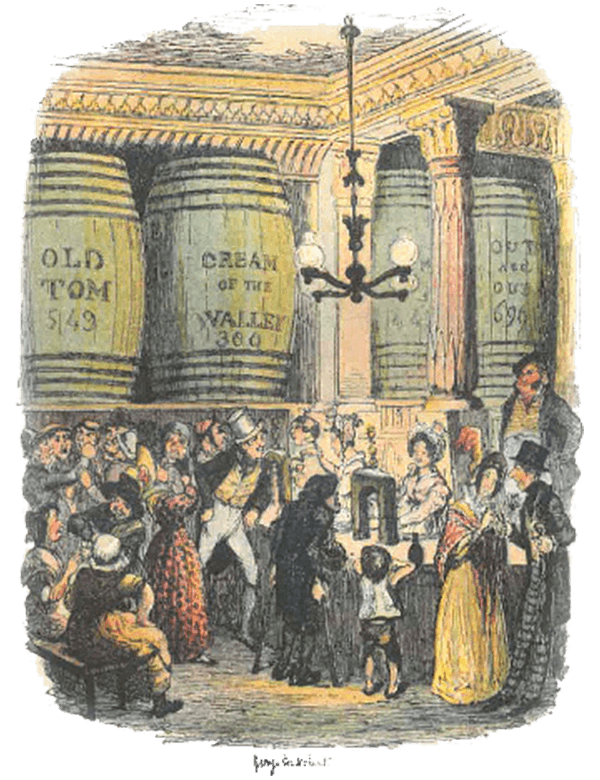
At the beginning of the 19th century, Old Tom was around 25% ABV, sold in barrels and drunk neat like a liqueur. By the late 19th century, Old Tom Gins were usually bottled at between 40% and 44% ABV. It was this style of Old Tom Gin that was deemed the benchmark of quality for English gin and led exports within the gin category.
1860s – 1950s
Old Tom Gin Evolves With Distillation
The best way to explain the history of London gin is by two periods — pre- 1860s and post-1860s. The style of London gin we enjoy now was born out of the 1860s. This was the turning point in how London gin was made and enjoyed with traditions that continue today.
The world of gin in the early 19th century could be characterised as highly fragmented, with little order or consistency among the pot-still distillates of the day. Hundreds of small distilleries rushed products for sale to local taverns for consumption, often with an expediency that bore little regard for product quality. Needless to say, ageing was not a consideration.
Early Old Tom was typically sweetened because the popular taste was for sweeter spirits and, in better distillates, for adding to the complexity of flavours. In lesser distillates and compounded gins, the sugar may well have been the focal point beyond delivery of alcohol. While aromatic esters of the pot-still distillates may have been interesting, Old Tom did not ascend in popularity until the introduction of the continuous still in the mid-19th century, which allowed for a cleaner neutral spirit to the Old Tom Gin base.
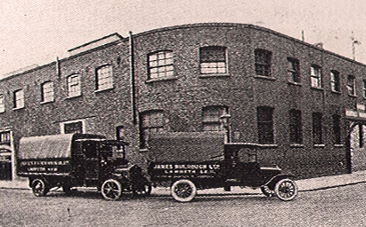
Led by James Burrough, often referred to as ‘The Great Gin Pioneer’ of his time, this charismatic innovator and pharmacist evolved London gin into the refined and sophisticated spirit still used today.
James Burrough was the first London distiller to use citrus (orange and lemon peel) as a botanical, which allowed gin to become crisp and refreshing. In the 1860s, a law was passed that allowed gin and all spirits to be sold in bottles rather than casks, allowing for cleaner spirit. Lastly, this era saw the most significant enhancement in distillation with the introduction of the column still, creating a much cleaner base spirit to be used in distillation.
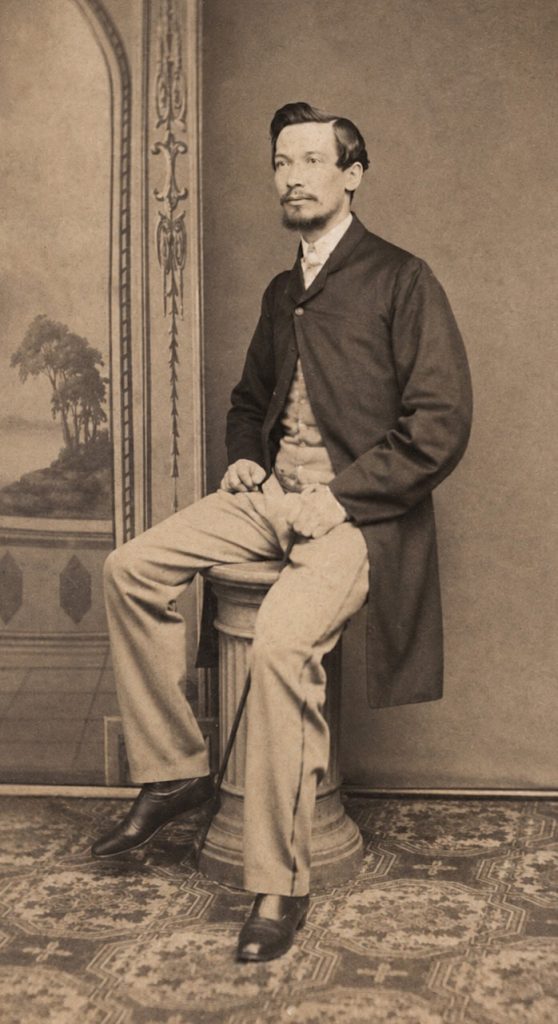
James Burrough
By the 1870s, most London distillers produced the following types of gin:

Old Tom Gin – Rich, rounded and flavourful, often advertised as ‘sweetened gin’, further heightening its appeal. Unaged.
Sloe Gin – Rich and fruity made by infusing gin with sloe berries (the small, dark plum of the blackthorn bush).
London Dry Gin – This emerging new style was called ‘Dry’ because it was unsweetened, often described on distillers’ price lists as ‘sugar-free’ gin. It became a darling to gin producers as it required less botanical inputs and no sugar, making it cost effective and appealing to a growing audience.
Navy Strength Gin – A staple for the British Navy, consumed for its medicinal properties and to boost morale among sailors. The gin was required to be at least 57% ABV, a practice known as proof, ensuring it was strong enough to light gunpowder if spilled.
Plymouth Gin – Made in the coastal city of Plymouth, England – a dry gin, but softer than London Dry in profile.
Hollands and Geneva – Hollands was a direct copy of Dutch genever and was usually aged; Geneva was the English version of Dutch genever, lighter in style and unaged. Relative to Old Tom and especially London Dry, the Hollands and Geneva were the least juniper intensive.
London gins were the chosen drink of the middle classes, particularly after the phylloxera plague had made French brandy all but unavailable. From the 1870s to the end of the century, Old Tom Gin was the dominant style and became an important export, particularly to the United States, where it was seen as a more versatile alternative to the heavier Dutch gins.
THE GLORY DAYS OF OLD TOM
The period between the 1880s and the 1920s marked the Golden Age of Cocktails, a time of great innovation when a new invention called “the cocktail,” along with a broad class of mixed drinks, became glamorous and sophisticated. Led by the first celebrity bartenders such as the famous ‘Professor’ Jerry Thomas, the fashion for drinking sweet mixed drinks spread throughout Europe, and every grand hotel had its American Bar serving a wide range of ‘fancy’ drinks, slings, and cocktails.

“Old Tom Gin was the star of the show. Harry Johnson’s famous “Bartender’s Manual” of 1882 listed it as an ‘essential liquor required in the bar room’. Old Tom was featured by name in the great creations of the day and is specified in the first written recipes for the Martinez, a precursor of the Martini, made with Old Tom Gin and sweet red vermouth, as well as the Martini itself, the Tom Collins, the Silver Fizz, the Ramos Gin Fizz, the Gibson Girl and many others. Old Tom was popular on both sides of the Atlantic until around 1920.
By the 1930s, London Dry Gin had overtaken the Old Tom style both at home and abroad. Nevertheless, demand for Old Tom continued, and many major distillers made it until the 1960s, when it all but disappeared, with only references in cocktail books prompting conversations as to what Old Tom Gin was.
THE RISE OF LONDON DRY Gin
The London Dry Gin style was developed from the 1860s onwards as distillation techniques improved and citrus started to be used as a core botanical, adding a crisp and refreshing dimension to gin.
London Dry grew more prominent as both its available supply and market demand outpaced that of Old Tom. By taste, the sharpness of London Dry Gin found appeal in some of the era’s most popular gin drinks, including the Dry Martini and the Bronx.
Additionally, successive wars and economic strife affected the production costs and output of Old Tom, with its higher distillation costs. At the same time, its market demand relative to London Dry was adversely affected by a lesser perception of alcohol potency among both the speakeasy drinkers and, later, the ultra-dry Martini crowd.
2007 AND BEYOND
The Modern Renaissance Of Old Tom Gin
By the early 21st century, gin cocktails had regressed so much that most bars and drinking establishments would carry just one, and at most two, gins. Cocktails were dominated by vodka, and even the old gin classics were now mostly consumed with vodka. However, a small group of new-generation bartenders, somewhat bored with using vodka, started to take an interest in gin and vintage mixed drinks. While appreciating that gin did not just make a cocktail alcoholic, they also found that it added flavour, character, and depth.
Whilst exploring historic cocktail books, they discovered how widely Old Tom Gin had previously been used in cocktails and that gin was not just the London Dry style. Many old cocktail books featured numerous cocktails made with a gin called Old Tom. On researching further, they realised that Old Tom was the first style of London gin and a requisite of the classic gin cocktails. Intrigued, they enquired whether it was still made and if they could try it.
The Hayman family, the last of the original London gin distillers and direct descendants of ‘The Great Gin Pioneer’ James Burrough, started making their Old Tom Gin again using their long-standing family recipe in 2007 as the requests became more frequent. This marked the modern-day renaissance of London’s first style of gin.

Hayman’s Old Tom Gin started appearing in cocktail bars across the world, and gin began returning to its rightful place on cocktail menus. Vintage gin cocktails could now be made with the correct ingredients.
This also led to other gins called Old Tom being produced. In London, Christian Jensen started making a gin with a higher proportion of botanicals, but it was not sweetened, this style being most associated with the ‘unsweetened’ style of London gin that appeared briefly in the 1850s.
In Portland, in the United States, Ransom Spirits developed an Old Tom Gin that was aged and made with a maltier base spirit, like Dutch Genever. The ageing created a debate whether Old Tom Gin, or gin in general, had ever been aged or rested. Gin has never required an age statement or been legally required to be aged. The use of barrels dates back prior to 1861, when spirits were sold in barrels and then decanted into jugs. Many historians argue that the impact of wood at this time would have been negligible, as these barrels would have been used time and time again with numerous repairs. The wood would have been spent, and their use would solely have been as a transportation vessel. That said, Ransom’s interpretation of Old Tom Gin has proved popular in whiskey-based cocktails, with other distillers following this style since.
Modern-day Old Tom Gin has its variances from the original London style made by Hayman’s to some of the newer modern-day interpretations. Old Tom Gin has played a significant role in re-establishing the gin category to its rightful place in bars and other drinking establishments, cocktail programmes, and amongst the most inquisitive consumers.
The renaissance of Old Tom Gin has also helped other categories become popular again, such as Vermouth, with historic brands such as Cocchi and Dolin returning to cocktail menus.
Storytelling through cocktails is vitally important for bartenders and bars around the world, and the Old Tom Gin story is still revered today.
OLD TOM GIN STYLES OF TODAY
HAYMAN’S OLD TOM GIN
The only Old Tom Gin still made in London from an historic 1860s family recipe developed by James Burrough. Hayman’s Old Tom Gin is a rich and characterful style of London gin, offering a rounder profile than London Dry and perfect for classic cocktails like the Martinez and Tom Collins, featuring notes of juniper, citrus, spice, and a hint of soft sweetness. It is referenced as the only style of London Old Tom Gin from the 1860s and the base to the classic Old Tom cocktails.
RANSOM OLD TOM GIN
“Made in Oregon, USA, using a blend of malted barley and high-proof corn spirit, giving it a subtle sweetness and malty backbone. It does not follow the London style but is closer to Genever. It is also aged in first-fill Pedro Ximenez sherry casks. Suitable for cocktails made with Whiskey.
JENSEN OLD TOM GIN
Based on an 1840 gin recipe from London. It is not sweetened and is a modern-day reference of the unsweetened London gin style of the time
cocktails
– TOM COLLINS –
Shake with ice:
2 oz / 50ml Hayman’s Old Tom Gin
1 oz / 25ml lemon juice
0.5 oz / 15ml simple syrup (1:1)
Double strain into Collins glass filled
with cubed ice
Top with club soda
Garnish with a lemon wheel/twist
– martinez –
Stir with ice:
1.75 oz / 50ml Hayman’s Old Tom Gin
0.75 oz / 25ml Cocchi Vermouth di
Torino ‘Storico’
0.25 oz / 5ml Maraschino liqueur
2 dashes Angustora bitters
Strain into chilled glass
Garnish with orange twist
– ramos gin fizz –
Prepare a Collins glass:
2 oz / 60ml Hayman’s Old Tom Gin
0.75 oz / 25ml heavy cream
0.75 oz / 25ml simple syrup (1:1)
0.5 oz / 15ml lime juice
0.5 oz / 15ml lemon juice
3-4 dashes orange blossom water
0.75 oz / 25ml egg white
Dry shake
Shake again with ice
Double strain over cubed ice
Top slowly with club soda
– aviation –
Shake with ice:
1.75 oz / 50ml Hayman’s Old Tom
0.5 oz / 15ml lemon juice
0.5 oz / 15ml maraschino liqueur
0.25 oz / 7.5 ml Crème de violette
Double strain into chilled cocktail glass
Garnish with cherry
– French 75 –
Shake with ice:
1.5 oz / 50ml Hayman’s Old Tom
0.5 oz / 15ml lemon juice
0.25 oz / 5ml simple syrup (1:1)
Double strain into chilled glass
Top with sparkling wine
Garnish with a lemon twist
– grapefruit spritz –
Build in a highball glass filled with ice:
2 oz / 50ml Hayman’s Old Tom Gin
0.75 oz / 25ml grapefruit juice
Top with club soda
Garnish with a grapefruit twist
– gin and tonic –
Build in a highball glass filled with ice:
2 oz / 50ml Hayman’s Old Tom Gin
Top with light tonic or club soda
Garnish with lemon twist